Experiential Learning
TBD
Director of Clinical Legal Studies Program and Oversees the Experiential Learning
Programs
Phone: (713) 313-7275
The GOAL of Experiential Education at Thurgood Marshall Law is to immerse each student in multi-level learning opportunities that encourages students to learn-by-observing; learn-by- assessing; learn by evaluating; learn-by-experiencing; and learn-by-doing. By melding the experiential learning curriculum with doctrinal foundations, the experiential learning program is firmly grounded in student-centered teaching that utilizes best practices in implementing experiential pedagogy
Through well planned experiential learning experiences, Thurgood Marshall Law helps students develop many of the core competencies that the American Bar Association has identified and Thurgood Marshall Law faculty have adopted as central for success in the legal profession today; skills that are needed to graduate students who are grounded in professionalism, who accept responsibility for their own professional identity and who are prepared to master competencies required of the legal profession in the 21st Century. Skills such as reflective learning, fact-gathering, and professionalism are enhanced through programs that bridge the gap from law school to law practice.
Thurgood Marshall Law firmly believes that our students ARE the SOCIAL ENGINEERS that will bring about positive change in the communities in which they serve, the communities in which they live and the world at large.
Mission Statement
Student focused learning is the mission of the TMSL Center for Experiential Learning: learn-by-observing; learn-by- assessing; learn by evaluating; learn-by-experiencing; and learn-by-doing. Each student is individually immersed in multi-level learning opportunities designed to help students develop their professional identity while promoting the development of their legal and ethical judgment and essential practice skills. This transformation of the student self occurs simultaneously while students expand and test their knowledge of substantive legal doctrine.
Vision Statement
Experiential Learning
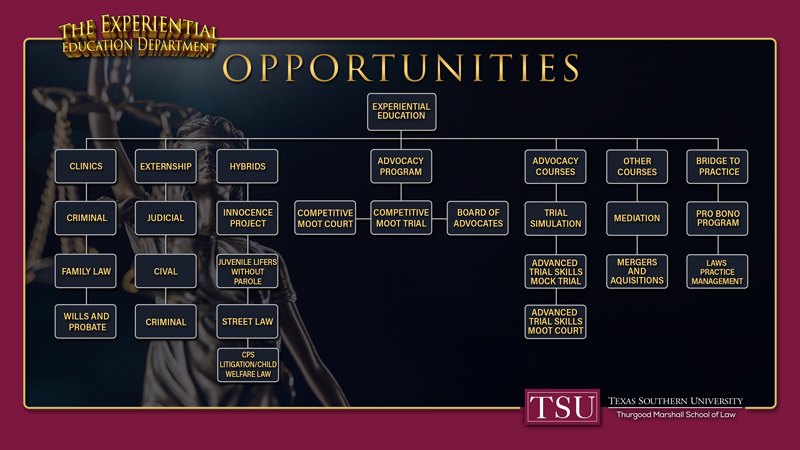
Each clinic provides training, individual supervision and feedback from clinical instructors or supervising attorneys. In addition to the externship or live-client clinic course, each student is required to enroll in a practice skills course which serves as the classroom component.
The Clinical Legal Studies Program offers three externships and three live-client clinics:
- Civil Law Externship
- Criminal Law Externship
- Judicial Law Externship
- Administrative Law Clinic*
- Civil Law Clinic
- Criminal Law Clinic
*Administrative law clinic includes environmental law and immigration law.
Opportunities
• Learn the law in a real-life context
• Serve traditionally underrepresented clients
• Develop professional and problem-solving skills
• Become aware of public interest, public policy and government concerns
• Engage in critical reflection on the lawyer’s role in relation to clients and society